Subvocalization and Greek Speed Reading

Abram K-J asks a question concerning my previous post, which mentioned the key role of subvocalization in reading. Subvocalization is “saying” the words silently in your mind as you read them. When you do this, you “hear” the words and your mind is able to comprehend them. In this sense, I said, reading is hearing. When you do a brain scan of a person who is reading, it’s the auditory centers of the brain that light up.

Abram asks how this works with speed reading. Continue reading

Posted in Greek Pedagogy | Tagged , , , , | 7 Comments

Michael P. Theophilos, “On the Pronunciation and Interpretation of ‘Biblical Greek’: A Re-assessment in Light of the Papyri”

The Review of Biblical and Early Christian Studies blog just posted a detailed summary of a recent paper presented by Michael Theophilos at a seminar in Cambridge. The paper appears to be substantially the same as the one he presented at the SBL last year in our Applied Linguistics session on the pronunciation question.

Check it out here: http://rbecs.org/2012/11/26/michael-p-theophilos-on-the-pronunciation-and-interpretation-of-biblical-greek-a-re-assessment-in-light-of-the-papyri/

Posted in Pronunciation | Tagged , , , | Leave a comment

Do You Need to Speak Greek in Order to Read It? (SBL 2012 Report)

The annual meeting for the Society of Biblical Literature was held last week in Chicago. Over the next couple of posts I want to sum up some of the activities that our Applied Linguistics group hosted. Hopefully I do better on this year’s summary than I did on last year’s (which I should probably one day get around to finishing!). I didn’t make it to the ETS meeting this year, so if anyone attended the Greek sessions there and is interested in doing a guest post (or posts) on them, please let me know.

A psycho linguist?

Psycholinguistics and Greek
I’ll start with the first session on Saturday morning. Continue reading

Posted in Greek Pedagogy | Tagged , , , , , , , , , , , , | 21 Comments

Greek, Rock Stars, and Tombstones

For All Hallows’ Eve, I present to you Jim Morrison’s gravestone, in Paris:

Jim Morrison's gravestone

It appears that the tombstone with the Greek phrase was ordered by Jim’s father in 1990. In his retirement, his father studied ancient Greek in order to read the NT, as well as, clearly, to hone his epitaphographical skills. It is speculated that he might have intended a double meaning with the inscription. I suppose a modern idiomatic translation would be: “to the beat of a different drummer.” I could not find the phrase in any ancient text, but personally, it puts me in mind of Socrates, made unique by the guidance of his own δαιμων.

Posted in Links of Interest | 4 Comments

John 2:4, Supposed Semitisms, and the Usefulness of TLG

Commentators on John 2:4 almost universally hold that Jesus here employs a Semitism or Hebraism with antecedents in the OT. In this post, I question this consensus by adducing a generally unnoticed parallel from Epictetus.

John 2:4
Here’s the text

Continue reading

Posted in LXX Texts of Note | Tagged , , , , , , , , , | 6 Comments

The Festivals as Participation in Divine Life

I am currently on a year-long sabbatical from teaching. Besides several articles, my major research project is my doctoral thesis for Durham University. I am writing on the way that apocalyptic and mystical groups in early Judaism interpreted the Jewish festival calendar. I am especially interested in the idea we find scattered throughout the literature that human beings, in their festival observance, were mirroring heavenly, usually angelic, activity.

Continue reading

Posted in Dissertation Research | Tagged , , , , , , , | 1 Comment

Living Language Classics at Ave Maria University

Followers of this blog may be interested in this report from Luke DeWeese about Christophe Rico’s recent Greek course this summer at Ave Maria University in Florida (HT: Stephen Hill). See also the brief report here on one of their excursions.

It appears that the Classics Department at Ave Maria has adopted (at least in part) living language methods for teaching Latin and Greek. Continue reading

Posted in Greek Pedagogy | Tagged , , , | Leave a comment

Living Greek in an Honduras High School

Be sure to check out Tim Decker’s new post. He is teaching Greek as a living language in a high school at Academia Los Pinares in Tegucigalpa, Honduras. A couple of things to note:

  • Tim is co-teaching the course. Living language teaching works much better when you have a partner teaching alongside of you. Continue reading
Posted in Greek Pedagogy | Tagged , , , | 1 Comment

My RBL Review of God’s Timetable by Daniel Stramara

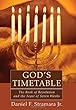
If you’re interested in the Book of Revelation or the Jewish feasts, you may want to check out my just-published review of a new book by Daniel Stramara, God’s Timetable: The Book of Revelation and the Feast of Seven Weeks.  Although my review is rather critical, the book had a lot of suggestions that really stimulated my thinking. It’s also helpful for getting into some neglected French bibliography on the subject. Plus, unlike so many scholarly monographs published nowadays at exorbitant prices, Stramara’s is very reasonable priced. You can pick up a new copy for $16 at Amazon.

Posted in Book Notices | Tagged , , , , , | Leave a comment

New Videos from the Biblical Language Center

You’ll want to be sure to read about and check out the new videos the Biblical Language Center has posted here, taken during their recent “Jesus in Jerusalem” Koine Greek immersion experience in January.

The first video provides Continue reading

Posted in Announcements | Tagged , , , , , | 3 Comments