BibleWorks and Communicative Greek, pt 1 (BibleWorks 9 Review)

Introduction
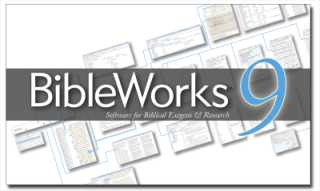
This is an introductory post to a short series in which I will explore some of the features in the new BibleWorks 9. There have already been numerous excellent reviews in the blogosphere. See, especially, David Instone-Brewer’s very helpful guide to BW9. In this series, then, I don’t want to do a typical review of all the features BW9 offers. Rather, I want to look at how BW can aid those who are interested in teaching or learning Greek communicatively.

Acquisition vs. the “Tools” Approach
All my readers should know by now that in my Greek teaching I aim for acquisition of the language. The goal is fluency or proficiency.
Continue reading

Posted in Reviews | Tagged , , , | 4 Comments

Greek Version of O Come, O Come, Emmanuel

I’m the kind of person who finds myself singing Christmas carols in the middle of 110-degree heat in August. I don’t condone this sort of behavior; it just happens. I especially love advent hymns that capture some of the rich themes of the Gospels. So, this year, I’ve decided to translate some of them into Koine Greek.

I just introduced O Come O Come Emmanuel to my class last week. It’s only just turned November, but we’re only learning one verse per week, so we’ll be near Christmas by the time we finish. Below I provide the English and the original Latin along with my Greek version of the hymn. Continue reading

Posted in Songs | Tagged , , , , , | 7 Comments

Philo’s Rejection of Six-Day Creationism

The Controversy
Creation, evolution and the interpretation of Genesis 1-3 are perennial hot-button issues in the American cultural and theological scene. Among evangelicals, the debate over the genre of Genesis 1-3 has recently reached a fever pitch. Some argue that belief in a literal six-day creation is a necessity, while others think the text is intended to be read literarily. John Walton of Wheaton College has recently published two helpful works that situate the creation account of Genesis in its ancient context: The Lost World of Genesis One (a more popular work) and Genesis 1 as Ancient Cosmology (a scholarly monograph).

Philo’s Contribution
Philo of Alexandria had quite a bit to say about the creation accounts. Here I want to look at how he handles the conflicting creation accounts in Genesis 1 and 2. Continue reading

Posted in Philo | Tagged , , , , , , , | 2 Comments

A Comprehensive Classroom Curriculum for Living Koine Greek (Needed Resources)

About the Series
This is part of an ongoing series where I discuss resources that should be developed to aid teachers and students in acquiring Koine Greek communicatively. In this installment, I address what I think is perhaps the most important resource needed if a communicative method is to gain a foothold in Greek classes on a seminary and college level. Continue reading

Posted in Greek Pedagogy | Tagged , , , , , , , , | 6 Comments

A Conversational Koine Greek Audio Course (Needed Resources)

About the Series
This is part of an ongoing series where I discuss resources that should be developed to aid teachers and students in acquiring Koine Greek communicatively.

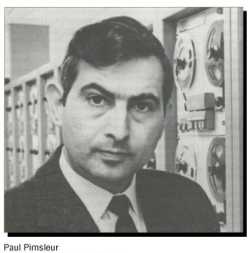
Paul Pimsleur

A Conversational Audio Course
I think we need an extensive audio course for Koine Greek. It could be modeled after similar audio programs produced by Pimsleur, Berlitz, Assimil, Michel Thomas or other companies. (The old Foreign Service Institute, or FSI, language courses are available, both audio and workbook, for free here–be sure to check them out!). I will discuss the Pimsleur model since I am most familiar with it. Here’s how it works Continue reading

Posted in Greek Pedagogy | Tagged , , , , , , , | 34 Comments

Resources on Philo of Alexandria

I hope to have semi-regular posts on Philo of Alexandria and some of his more notable readings of Scripture. I enjoy reading through Philo in my spare time (in translation, of course—reading Philo in Greek is not “pleasure reading” for me—yet!). These posts will also hopefully serve as a resource for the students in my upcoming New Testament Backgrounds course, where we will devote considerable time to Philo. For more information on Philo, Continue reading

Posted in Philo | Tagged , , , , , , | 2 Comments

Sabbath Rest in Hebrews (LXX Texts of Note)

Rest is a major theme in Hebrews 3-4. There, the author quotes at length Psalm 95 (94 in LXX), which invites its hearers to learn from the example of their forefathers, who rebelled in the wilderness and were kept from entering the land of promise. There are several elements of interest to students of the Septuagint here.

Continue reading

Posted in LXX Texts of Note | Tagged , , , , , , | Leave a comment

LOLing in Koine (Greek Word of the Week)

So, here’s the sitch. Ur txting ur BFF & they tell a funny joke, rt? OMG, ur ROFLing 4eva! And, of course, desirous to explicate the amount and volume of your gelotological response to said stimuli, you endeavor to articulate it with the greatest degree of concision and the maximal amount of verbal economy, thus seeking out the optimal acronymous designation for such behavior. Continue reading

Posted in Word of the Week | Tagged , , , , , | 7 Comments

A Contemporary English to Koine Greek Dictionary (Needed Resources)

About the Series
This is part of an ongoing series where I discuss resources that should be developed to aid teachers and students in acquiring Koine Greek communicatively.

Public Domain English-Greek Dictionaries
Back in the day, when courses in Greek composition were a normal part of one’s ancient language training, English to Greek dictionaries were plentiful. Lucky for us, “back in the day” was long ago enough to put these works in the public domain, which means they can be found (and downloaded) on the Internet Archive or on GoogleBooks.

Here are a few examples Continue reading

Posted in Greek Pedagogy | Tagged , , , , , , , | 31 Comments

A Few Links of Interest

Here are some posts around the web you might want to check out:

Posted in Links of Interest | Tagged , , , , , , , | 1 Comment