
About the Series
This is part 4 in a series of posts laying out the problems with typical Koine Greek teaching methods and proposing a reformation in pedagogy. Part 1 talked about what it means to read Greek or any other language. Part 2 talked about the reality of what goes on in most traditional Greek teaching and testing. Part 3 argued that Greek professors, too, suffer from the ineffectiveness of the traditional method, and as a result are seriously lacking in their own grasp of Greek.
In this post, I want to argue that an oral/aural approach to Greek is necessary if we want to achieve true reading proficiency (as defined in part 1).
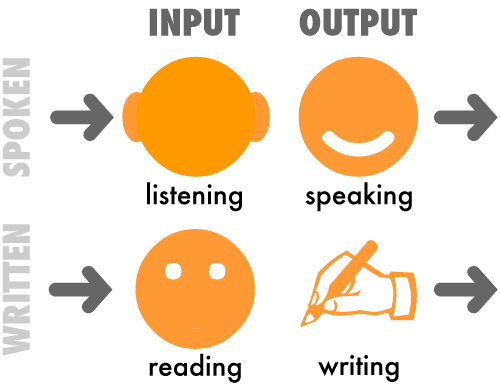 The Four Skills
All modern language teaching aims at cultivating proficiency in four skills: reading, writing, speaking and listening. Recent pedagogy has also stressed cultural knowledge as a key component of fluency.










 καὶ τὰ λοιπά