Online Living Greek Course Opportunity

My readers may be interested in the Greek course offered by the Catholic Education Center. They will be using Randall Buth’s materials for their textbook and living language methods for their instruction. It looks like they hope eventually to offer a four-course Continue reading

Posted in Announcements | Tagged , | 7 Comments

“Full of Grace” (Or, Was Mary a Hottie?)

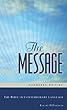
Luke 1:28 and The Message
Luke 1:28 records Gabriel’s greeting to Mary, χαῖρε, κεχαριτωμένη. In a recent conversation, someone brought up Eugene Peterson’s Message translation of the passage:

Good morning!
You’re beautiful with God’s beauty,
Beautiful inside and out!
God be with you.

Some Observations
The Message is frequently bashed Continue reading

Posted in NT Texts | Tagged , , , , , , , , , , , | 5 Comments

Naming the Movement

Every Movement Needs a Name
I have often wondered how to name the movement (of which I am a part) to teach Koine Greek as a living language. I think every movement needs a good tag to be successful, one that captures the essence of what the movement stands for. Several possibilities present themselves: Continue reading

Posted in Greek Pedagogy | Tagged , , , , , | 24 Comments

Setting the Bar at Fluency, pt. 2 (SBL 2012 Report)

This is the fourth and final post in my report on the annual meeting for the Society of Biblical Literature, held Nov 17-20 in Chicago. Here are the first, second, and third parts. The rest of this post is the second half of my presentation attempting to answer the question, “Where should we set the bar in biblical language training?” Continue reading

Posted in Greek Pedagogy | Tagged , , , , , , , , , , , , , | 18 Comments

Setting the Bar at Fluency, pt. 1 (SBL 2012 Report)

This post is the third post in my report on the annual meeting for the Society of Biblical Literature, held Nov 17-20 in Chicago. Here are the first and second parts. In its second session, our Applied Linguistics group hosted a panel to address the question, “Where should we set the bar in biblical language training?” The rest of this post is Continue reading

Posted in Greek Pedagogy | Tagged , , , , , , , , , , , | 14 Comments

Chameleon (Greek Word of the Week)

Perhaps there are a few of you in this club cultured enough to understand the link between the pic on the left and this week’s Greek WOTW. In case you’re a man without conviction or a man who doesn’t know, read on and learn. Continue reading

Posted in Word of the Week | Tagged , , , , | 1 Comment

Where Should We Set the Bar in Biblical Language Training? (SBL 2012 Report)

This post is part 2 of my report on the the annual meeting for the Society of Biblical Literature, held Nov 17-20 in Chicago. Here is the first part. In its second session, our Applied Linguistics group hosted a panel to address the question, “Where should we set the bar in biblical language training?” The idea Continue reading

Posted in Greek Pedagogy | Tagged , , , , , , , , | 4 Comments

New Testament Read with Modern Greek Pronunciation – FREE!

If you’re interested in listening to the NT in Greek, and if you prefer a modern pronunciation, you’ll want to check out the new (to me, anyway) FREE resource at Bible.is. It’s the entire NT in Koine Greek Continue reading

Posted in Resources | Tagged , , | 18 Comments

Christmas Trees in Ancient Greek

Fiore_Square_WheelHow can you talk about your χ-mas tree in Koine Greek? As is often the case, so as not to reinvent the τροχός, it’s good to see what Modern Greek uses for ‘Christmas tree.’ MGk uses τὸ ἔλατο. In fact, you can listen to the well known carol, ω έλατο, here. Lyrics are here.

christmas-tree-decoration

Christmas trees are usually pine or fir trees Continue reading

Posted in Word of the Week | Tagged , , , | 7 Comments

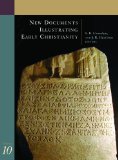
New Volume of Inscriptions and Papyri from Eerdmans

512--Kxq4DL._SL160_Eerdmans has just released the 10th volume in its NDIEC series. That stands for New Documents Illustrating Early ChristianityThe editors of this series comb through all the published inscriptions and papyri and select the ones they think are most relevant to the study of early Christianity. This series Continue reading

Posted in Book Notices | Tagged , , , , | Leave a comment